
Radamés Gnattali’s Sonata for Guitar and Cello (1969) is a vibrant example of Brazilian classical music infused with the rhythmic and harmonic richness of popular styles like samba and choro. Gnattali (1906–1988) was a prolific composer, arranger, and performer who bridged classical and popular music traditions in Brazil, often blurring the lines between the two genres. Known for his collaborations with virtuoso instrumentalists, Gnattali dedicated this sonata to guitarist Laurindo Almeida.
The sonata unfolds in three movements: a lyrical Allegretto comodo, a deeply expressive Adagio, and a lively, rhythmically intricate Con spirito finale. It showcases the guitar’s delicate textures and rhythmic versatility alongside the cello’s melodic warmth and depth, creating a seamless dialogue between the instruments. This piece exemplifies Gnattali’s ability to celebrate Brazil’s cultural heritage while adhering to classical formal structures, making it a cornerstone of the cello-guitar repertoire.
Here are the links to the Laurindo Almeida recording with Frederick Seykora on the cello. It has an improvised percussion part!
I. https://www.youtube.com/watch?v=INMVxJoffAk
II. https://youtu.be/RxEaGZenj30?si=w6Om-r15C0zzZicw
III. https://youtu.be/orO9sGAO5xU?si=sbaUoxRG0QNzZxym
Unfortunately, there are some errors in the score and cello part. Below is a list of corrections in the cello part you should have for the next time you play this Sonata:
Movement I
- The bar numbering is continuous throughout the three movements. Random time signature changes are missing in the cello part throughout the piece.
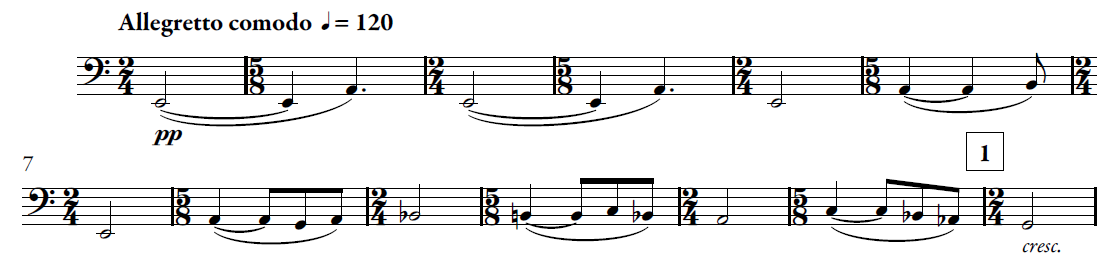
- mm. 5-8 are misprinted in the part. Here is the corrected version to glue into your part.
- m. 47 is missing a slur
- m. 69 is missing “arco”
- m. 81: all 3 notes must be slurred
- m. 136 is missing “Tempo primo”
Movement II
- m. 173 is missing a “cresc.” in the separate cello part.
- m. 174, note 3 needs to be a G#. It's printed as an A#. All A's must be natural in this bar.
- m. 197, note 3 must be a G, not a B
- m. 197, note 5 is missing “arco”
- m. 198, note 1 must be an F, not an A
- m. 201 has a G, an octave below the open G. This is obviously an error.
Movement III
- m. 203 is missing “senza sord.”