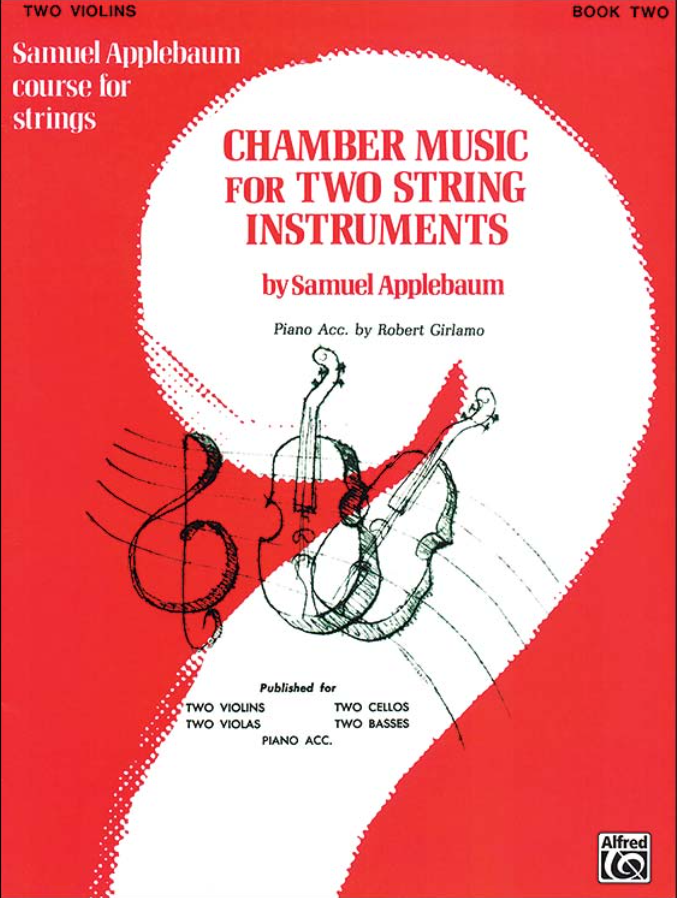
Anyone who has worked through Samuel Applebaum's Chamber Music for Two Instruments, Volume 2, may have noticed some inconsistencies in the attributions of its pieces. While the collection is undeniably filled with charming and pedagogically valuable music, many of the composer attributions are puzzling or outright incorrect. This article explores the “real” origins of several pieces in this volume, based on my research, while acknowledging that some remain a mystery.
The Mystery of Misattributions
Why does this collection feature so many misattributions? The reasons are unclear. It could stem from the reuse of arrangements or errors in the sources Applebaum relied on. Whatever the case, students and amateurs who look to this volume for both performance and a glimpse into historical repertoire might come away misled. The music is enjoyable, but the inaccuracies do a disservice to anyone wanting to understand its true context.
Here is what I’ve managed to uncover about the pieces in this volume, alongside their real composers or sources.
The Real Origins of Selected Pieces
Anonymous – Horch, was kommt von draußen rein (Spring Dance in Applebaum)
The well-known German folk tune Horch, was kommt von draußen rein is attributed as "Spring Dance" in Applebaum's collection. Though anonymous, its origins as a traditional song are clear, and calling it "Spring Dance" distances it from its folk heritage.
Alexander Uber – Munter, fröhlich: Willkommen lieber schöner Mai (The Clock in Applebaum)
Another piece with German folk roots, this song celebrates the arrival of May. In the Applebaum collection, it is curiously renamed “The Clock,” which seems to have little connection to its original purpose or style.
Christlieb Binder – Harpsichord Concerto in A Major, Mvt. II (Aria in Applebaum)
This serene movement from Binder’s Harpsichord Concerto has been retitled “Aria.” While Binder’s name has been largely forgotten, he was a respected composer and organist in 18th-century Germany.
Johann Linike – Trio Sonata in C Major, Mvt. III (A Courtly Dance by Loeillet in Applebaum)
This movement is incorrectly attributed to Loeillet in Applebaum. Linike, another relatively obscure composer, actually wrote this elegant dance.
André Grétry – On dit qu'à quinze ans from Lucile (Siciliano by C. Stamitz in Applebaum)
This charming aria from Grétry’s opera Lucile has been misattributed to Carl Stamitz. The misattribution is baffling, as Grétry’s style is distinct and recognized among 18th-century French composers.
Chedeville – Duo Galant, Op. 5, No. 5, Rondeau I? (Contre Dance by Chedeville in Applebaum)
Applebaum correctly attributes this piece to Chedeville but renames it “Contre Dance.” The real source is likely the Duo Galant, Op. 5, No. 5, though further confirmation is needed to verify this exact match.
Anfossi – Allegretto? (Prelude by Fröhlich, arr. Hohmann in Applebaum, No. 179 in the Hohmann Violin School, but without a title)
While I suspect this piece is by Pasquale Anfossi, it is labeled as “Prelude” by the enigmatic Fröhlich borrowed from the Hohmann's Violin School. Anfossi, an Italian composer known for operas and sacred works, seems more plausible as the actual source.
Mozart – Minuetto, K. 6
This is one of the few pieces in the volume attributed correctly by Applebaum. The Minuetto, composed by Mozart when he was just a child, is a delightful inclusion in its rightful form.
Purcell – Bourrée from The Old Bachelor
Another correctly attributed piece, this lively Bourrée comes from Henry Purcell’s incidental music for the play The Old Bachelor.
The Rest: Still a Mystery
Not all pieces in this volume have been identified. Some may remain mysterious due to incomplete records or lost sources. Others could be fabrications, arrangements, or simplified versions of works by known composers.
Why Does It Matter?
For educators, students, and amateur musicians, historical accuracy matters. Understanding the origins of a piece enriches our interpretation and provides valuable context. By misattributing works—or inventing composers—Applebaum’s collection inadvertently perpetuates misinformation. While the music itself is delightful and useful, these inaccuracies could confuse those exploring classical music’s rich history.
If you’re working through this volume, I encourage you to enjoy the music but also to dig deeper into its real origins.