Musicians love talking about their gear. Whether it’s the instrument itself, the bows, or even the microphones for recording, these tools shape the sound we create. While I firmly believe that the musician is ultimately responsible for the quality of the music—great artists can sound amazing on even beginner instruments—the instrument provides the color palette. A well-crafted instrument can make certain techniques easier or offer unique tonal possibilities.
That said, I’ve often seen student instruments that aren’t properly set up, creating unnecessary struggles for beginners. Problems like strings that are too high or far apart, thick neck blocks that make the fourth position hard to find, or overly heavy instruments can hold back a student’s progress. Some issues often have simple fixes, though others require more attention. But that’s a story for another time.
Here, I want to share my personal journey with cellos, bows, and other equipment I’ve used throughout my career.
My First Instruments

When I started taking private lessons, I played on a Knilling laminate plywood cello. It was far from fancy, but it served me for four years (a little too long) as I built my foundation. After that, I upgraded to a Dunov cello, a Romanian shop instrument. I used this cello for two years and even auditioned for college with it. I’m not sure if “Dunov” is the name of an actual luthier or just a brand, but it was a decent step up for me at the time.
Right before my sophomore year in college, I switched to a Paesold model 611 cello made in Germany. 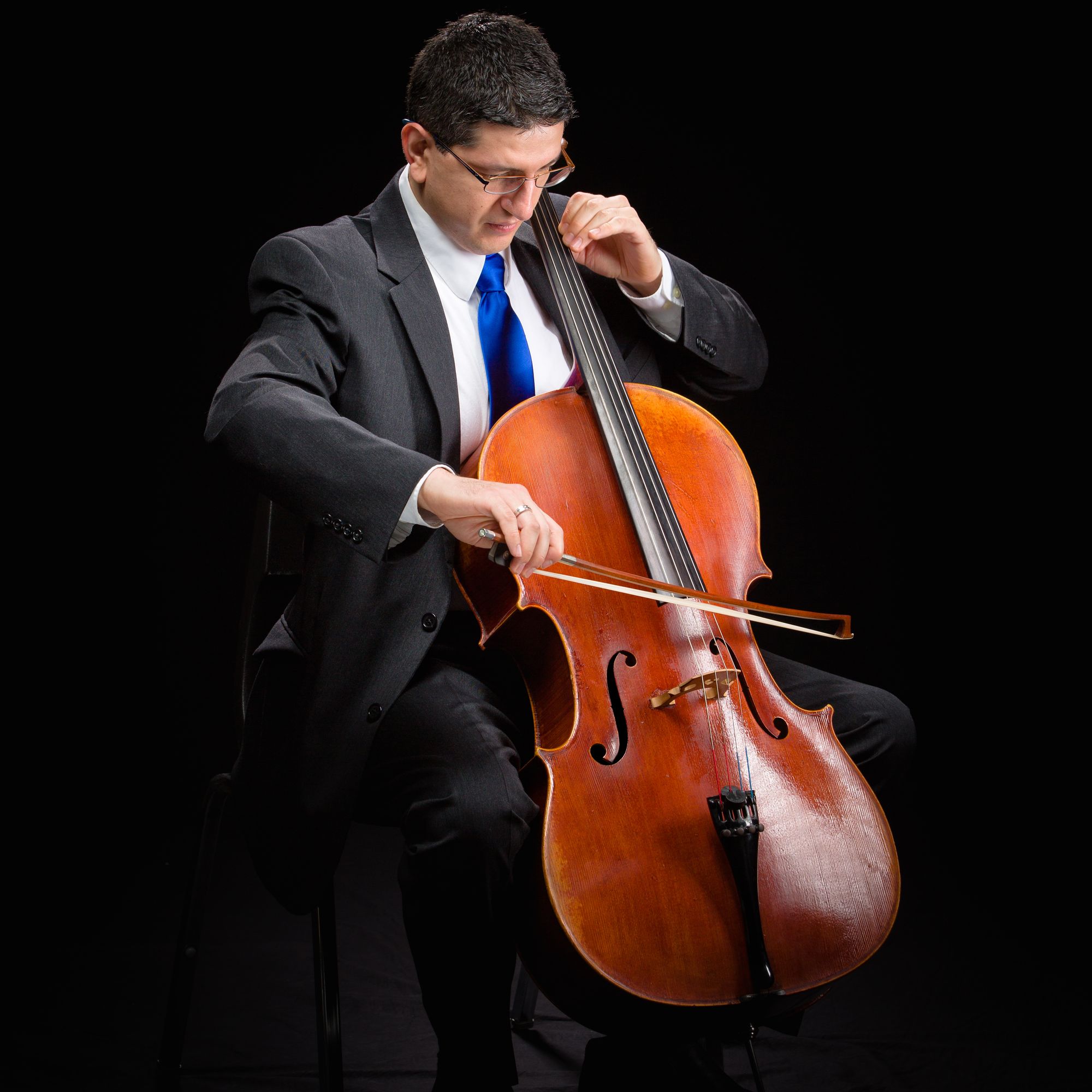 This instrument was my companion for the next 13–14 years. It saw me through countless performances, lessons, and milestones. Along the way, I tried different bows, but my main bow during this time was one I bought from my teacher. Though it was on the lighter side at 74 grams, it was well-balanced and produced a big, rich sound. I even used it for thickly-scored concertos with no trouble projecting.
My Current Setup

I’ve been playing a cello crafted by Michael Koeberling in 2016 for the past eight years. Made in Murnau, Germany, this instrument offers incredible depth and versatility. It’s a joy to play, and I feel like it gives me the perfect palette for any music I perform. I've modified it with an Anima Nova soundpost, a composite wood/carbon fiber tailpiece, a TekPin endpin, and Pegheds geared pegs.
I rotate between two bows now: one commissioned from the late Roger Zabinski and another by Pierre Guillaume. Both are excellent and bring out different qualities in my cello’s sound. Additionally, I have a couple of replica bows from the Baroque and Classical periods, which I use for historically informed performances.
When it comes to strings, I’ve experimented a lot. Right now, I’m using Thomastik Dominant Pro strings, which I’ve played for almost a year. Before that, I was a long-time fan of Pirastro Perpetual Cadenza C and G strings, pairing them with various D and A strings like Versum Solo, Perpetual Edition, and Soloist. Strings are expensive…
Recording Equipment
Recording the cello is an art in itself, and the microphones you use make a big difference in the final sound. My favorite microphones are the AEAR R84a and R88a, as well as the Schoeps MK4. These mics capture the natural warmth and richness of the cello, creating recordings that feel true to the instrument’s voice.
A Message to Musicians
Whether you’re a student or a seasoned performer, the gear you use matters, but it’s ultimately about how you use it. While I’ve upgraded my instruments and equipment over the years, I’ve always believed in working with what you have and maximizing its potential. If your instrument inspires you to practice and play, it’s the right one for you—at least for now.
Gear is fun to talk about, but never forget: the musician is the true source of the music.