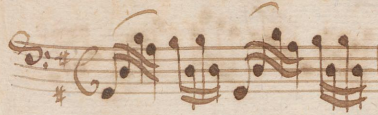
The Six Cello Suites by Johann Sebastian Bach stand as the most unifying yet polarizing pieces in the cello repertoire. Their unifying nature comes from their universal significance and enduring appeal; their polarizing aspect arises from the endless debates about how to interpret them. This guide won’t resolve these disagreements but aims to offer a listening approach that contextualizes the Suites within Bach’s larger body of work and highlights the value of diverse interpretations.
Understanding the Suites: ACSOG Structure
Each Suite shares the same movement structure:
- Prelude
- Allemande
- Courante
- Sarabande
- Optional Dance (Alternativement): Minuets, Bourrées, or Gavottes
- Gigue
This structure, commonly referred to as ACSOG, reflects Bach’s connection to Baroque dance forms. The optional dances differ among the Suites:
- Suites 1 and 2: Minuets.
- Suites 3 and 4: Bourrées.
- Suites 5 and 6: Gavottes.
To better understand these movements, I recommend creating playlists organized by dance type. For example, have a playlist of all the Allemandes, another for the Sarabandes, and so on. This approach will help you uncover how Bach’s treatment of each form evolves across the Suites.
Broadening Your Exploration
While focusing on the Cello Suites, don’t forget to explore similar dances in Bach’s other works. His French Suites, English Suites, and Partitas for Keyboard offer invaluable context for understanding the structure and character of these dances. For instance, listen to recordings by Trevor Pinnock or Glenn Gould, both of whom provide masterful interpretations of Bach’s keyboard works.
You can also find parallels between the dance movements in the Cello Suites and those in Bach’s Orchestral Suites (Ouvertures):
- The Bourrées from Ouverture No. 1 resemble those in Suite No. 3.
- Bourrée II from Ouverture No. 4 has the sixteenth-note pick-ups in Bourrée I from Suite No. 4.
- The Gigue from Ouverture No. 3 shares energy and character with the Gigue from Suite No. 4.
- The Gavottes in Ouverture No. 3 can inspire your interpretation of those in Suite No. 6.
Explore the lute version of Suite No. 5, where Bach himself adapted the Suite for a different instrument, shedding new light on phrasing and texture.
Contextualizing the Preludes
The Preludes, often seen as distinct from the dance movements, can themselves be linked to dance forms. For example:
- The Prelude from Suite No. 2 can be interpreted as a Sarabande.
- The Prelude from Suite No. 3 has characteristics of a Courante.
- The faster section of the Prelude from Suite No. 5 and the Prelude from Suite No. 6 resemble Gigues.
- The opening of the Prelude from Suite No. 5 can be stylized after any of the opening sections from the Ouvertures.
- The Prelude from Suite No. 6 can be stylized after the fast section of the Ouverture No. 4 opening movement.
If these connections resonate with you, consider adding these Preludes to their respective dance playlists.
Comparing Interpretations
Listening to multiple performances of the Suites is essential for appreciating their interpretive depth. My current favorite recordings are by Ophélie Gaillard, Toke Møldrup, and Yo-Yo Ma (particularly his Six Evolutions); they demonstrate a vast range of possibilities. Each cellist brings their own perspective, shaped by historical research, personal artistry, and technical approach.
For example, some performances emphasize the dance-like nature of the Suites, with light, rhythmic interpretations, while others focus on their introspective or architectural qualities. Comparing these can inspire your own preferences or interpretations.
Finding Parallels in Bach’s Works
Bach’s mastery of counterpoint and thematic development ensures that motifs and structures recur across his compositions. Exploring these parallels deepens your understanding of his musical language:
- The Prelude from Suite No. 1 resembles the C-major Prelude from the Well-Tempered Clavier I.
- The Prelude from Suite No. 3 resembles Invention No. 8 in F major, sharing similar melodic and harmonic gestures.
- The Courante from Suite No. 6 echoes the opening movement of Bach’s Magnificat.
Such discoveries not only enhance your appreciation of the Suites but also provide fresh interpretive ideas.
The Value of Variety
One of the most compelling aspects of Bach’s Cello Suites is the variety of interpretations they inspire. Even a single cellist may approach them differently across recordings or performances. This flexibility reflects the richness of Bach’s music and its ability to speak to diverse audiences and musicians.
By exploring the Suites alongside other works by Bach, you can better understand his compositional style and the choices available to interpreters. This knowledge will allow you to enjoy the music more deeply and appreciate the creative decisions behind each performance.
Closing Thoughts
The Cello Suites are not just masterpieces of the cello repertoire—they are windows into Bach’s genius and the Baroque era’s artistic world. Whether you are a cellist or an avid listener, exploring the Suites in the context of Bach’s other works will open new dimensions of understanding and enjoyment.
If you need help finding recordings or related works, feel free to reach out—I’d be happy to guide you further on your journey with Bach.